
Description
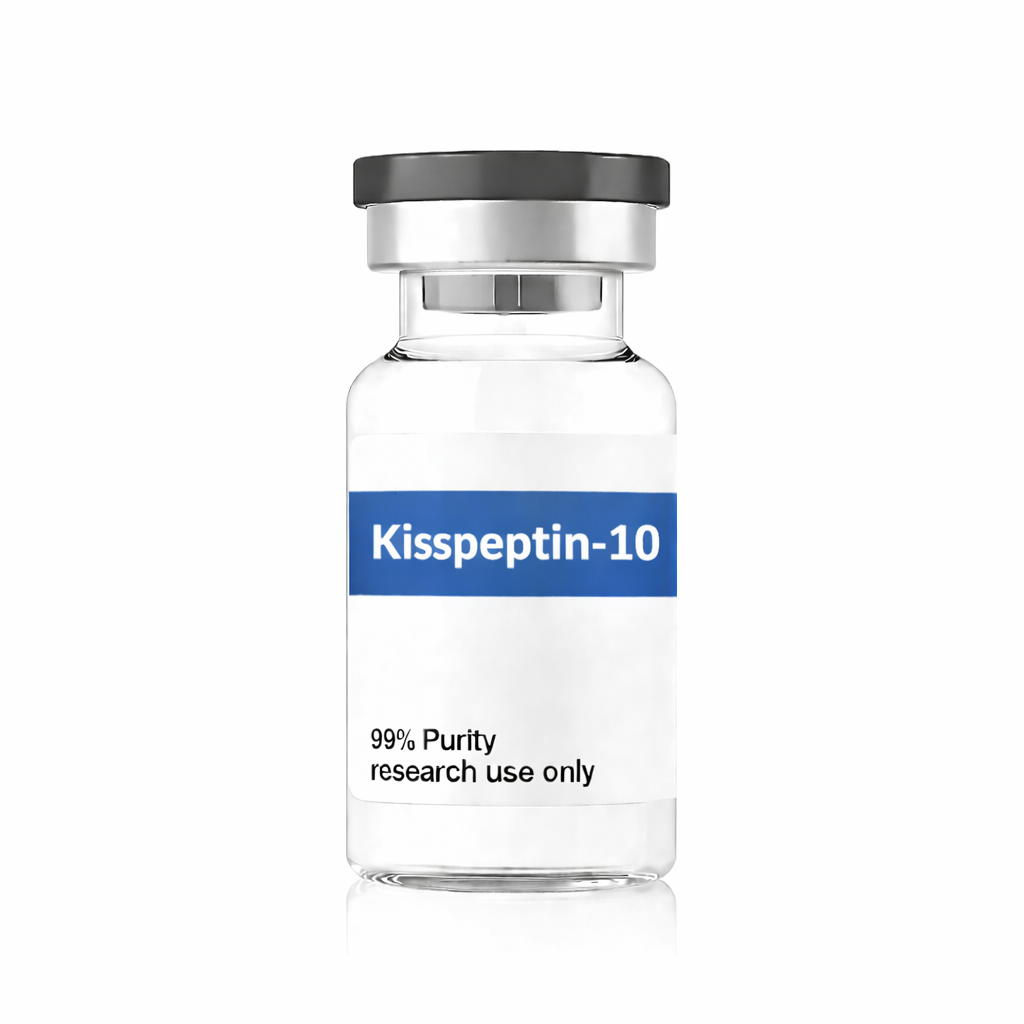
Kisspeptin Peptide: Kisspeptin-10 Research & Information
Kisspeptin peptide is a naturally occurring neuropeptide that has become an important subject in reproductive endocrinology and peptide research. Scientific research has established an important relationship between kisspeptin signalling, gonadotropin-releasing hormone (GnRH), and the hypothalamic-pituitary-gonadal (HPG) axis.
For researchers exploring kisspeptin, kisspeptin-10, or kisspeptin 10, understanding the underlying biology is essential. Kisspeptin signalling is particularly interesting because it provides an important connection between the brain’s regulation of reproductive hormones and downstream endocrine activity.
At Grey Peptide Market, this page provides general educational information about kisspeptin peptide research, including kisspeptin-10, its biological mechanism, current research areas, and terminology commonly associated with the peptide.
What Is Kisspeptin Peptide?
Kisspeptin refers to a family of peptides produced from the KISS1 gene. These peptides interact with the kisspeptin receptor, commonly known as GPR54 or KISS1R.
Kisspeptin signalling has a central role in the regulation of reproductive physiology. Research indicates that kisspeptin-producing neurons can influence GnRH neurons, which subsequently regulate the secretion of reproductive hormones including luteinizing hormone (LH) and follicle-stimulating hormone (FSH).
Because of this relationship, kisspeptin has attracted considerable interest in studies involving puberty, fertility, reproductive hormone regulation, and endocrine signalling.
Reviews published in the scientific literature describe kisspeptin as an important upstream regulator of GnRH activity and reproductive function.
Kisspeptin and the Hypothalamic-Pituitary-Gonadal Axis
One of the most important reasons researchers study kisspeptin peptide is its relationship with the hypothalamic-pituitary-gonadal axis.
The HPG axis is a biological communication system involving the:
- Hypothalamus
- Pituitary gland
- Gonads
Kisspeptin signalling occurs upstream of GnRH neurons in this system. Activation of the kisspeptin receptor can stimulate GnRH secretion, which can then influence pituitary gonadotropin secretion.
These downstream hormones include LH and FSH, which are involved in reproductive processes in both males and females.
Research therefore places kisspeptin at an important point within the neuroendocrine regulation of reproduction.
What Is Kisspeptin-10?
Kisspeptin-10, also written as kisspeptin 10 or Kp-10, is one of the kisspeptin peptides studied in experimental and clinical research.
Kisspeptin-10 has been investigated because of its ability to interact with the kisspeptin receptor and stimulate reproductive hormone signalling.
Human research has examined administration of kisspeptin-10 and its effects on reproductive hormones. For example, research in healthy men has reported increases in LH following kisspeptin-10 administration, while responses can vary according to sex, physiological state, route of administration, and experimental protocol.
This makes kisspeptin-10 an important molecule for researchers investigating the connection between hypothalamic signalling and reproductive endocrinology.
Kisspeptin-10 and LH
A major area of interest surrounding kisspeptin-10 is its relationship with luteinizing hormone (LH).
Kisspeptin signalling can activate GnRH neurons. GnRH subsequently influences pituitary gonadotropin secretion, including LH.
Human studies have investigated this pathway under controlled experimental conditions. Research has demonstrated that kisspeptin-10 can stimulate LH secretion in certain study populations and experimental settings.
The response is not necessarily identical across all individuals or protocols. Factors such as dose, administration method, sex, reproductive state, and timing can influence observed hormonal responses.
For this reason, scientific findings should be interpreted within the context of the individual research study rather than treated as universal outcomes.
Kisspeptin and FSH
Follicle-stimulating hormone (FSH) is another reproductive hormone connected to the kisspeptin-GnRH pathway.
Because kisspeptin influences GnRH signalling, researchers have investigated whether kisspeptin administration can affect downstream FSH secretion.
Experimental human research has reported changes in reproductive hormones following kisspeptin-10 administration, although hormonal responses can differ between study populations and experimental conditions.
This relationship continues to be investigated as researchers seek to understand how kisspeptin signalling could potentially be used in reproductive endocrinology.
Kisspeptin Research and Reproductive Physiology
The scientific interest in kisspeptin extends across several areas of reproductive biology.
Research has examined kisspeptin in relation to:
- Puberty
- GnRH secretion
- LH and FSH regulation
- Reproductive hormone signalling
- Ovulation
- Fertility research
- Menstrual-cycle physiology
- Male reproductive endocrinology
- Female reproductive physiology
- Neuroendocrine signalling
A recent review published in Physiological Reviews describes kisspeptin and neurokinin B as important regulators of reproductive physiology, including puberty and adult reproductive function.
Kisspeptin and Puberty
Kisspeptin has been extensively studied in connection with the biological processes involved in puberty.
The onset of reproductive maturity requires activation of the GnRH system. Research indicates that kisspeptin-producing neurons participate in this process by providing important signalling input to GnRH neurons.
Animal and human research has contributed to the understanding of how kisspeptin signalling is connected with the activation of the reproductive endocrine system.
This has made kisspeptin an important subject in reproductive neuroendocrinology.
Kisspeptin-10 10mg: Understanding the Terminology
Researchers searching for kisspeptin-10 10mg may encounter different product descriptions, concentrations, formulations, and research specifications.
It is important to distinguish between the name of a peptide and the amount or concentration associated with a particular research preparation.
The term 10mg describes an amount of material; it does not by itself establish an appropriate research protocol, administration method, purity standard, or biological effect.
For that reason, researchers should evaluate the complete product documentation rather than relying solely on a product name or numerical strength.
Kisspeptin vs Kisspeptin-10
Although the terms are often used interchangeably in online searches, kisspeptin and kisspeptin-10 are not simply identical search terms.
“Kisspeptin” can refer broadly to the peptide family and biological signalling system, whereas kisspeptin-10 refers specifically to a peptide fragment studied for its activity at the kisspeptin receptor.
This distinction is useful when evaluating scientific literature.
When searching for research, useful variations include:
- Kisspeptin peptide
- Kisspeptin
- Kisspeptin-10
- Kisspeptin 10
- Kp-10
- Kisspeptin receptor
- KISS1
- KISS1R
- GPR54
These terms can help researchers locate more precise scientific information.
How Does Kisspeptin Work?
The biological mechanism of kisspeptin is centered around its interaction with the kisspeptin receptor.
Kisspeptin binds to KISS1R, also known as GPR54, on relevant neurons. This signalling pathway can stimulate GnRH neurons.
GnRH then acts on the pituitary gland, influencing the secretion of gonadotropins such as LH and FSH.
The overall pathway can be simplified as:
Kisspeptin → KISS1R/GPR54 → GnRH → LH/FSH → reproductive endocrine signalling
This pathway explains why kisspeptin has become such an important research subject in reproductive endocrinology.
Current Research Into Kisspeptin
Kisspeptin research continues to develop.
Scientists have investigated the peptide in relation to reproductive disorders, fertility treatments, hormonal regulation, and other areas of reproductive physiology.
Recent research has also examined repeated or longer-term administration of kisspeptin-10 in controlled human studies. A 2026 study in healthy men investigated acute and chronic subcutaneous kisspeptin-10 administration and reported sustained gonadotropin responses under a specific intermittent administration protocol.
These findings illustrate why ongoing research is important: the biological effects of a peptide can depend substantially on administration pattern, experimental design, participant characteristics, and the physiological system being studied.
Kisspeptin Peptide Research Considerations
Anyone evaluating kisspeptin peptide for research purposes should consider several factors.
Identity
Confirm the exact peptide identity and sequence associated with the research material.
Purity
Analytical information such as a certificate of analysis can help researchers evaluate the stated purity of a research material.
Documentation
Product documentation should clearly identify the material and relevant analytical information.
Storage
Peptide stability can depend on formulation, temperature, moisture, light exposure, and handling conditions. Appropriate storage should therefore follow the manufacturer’s documented specifications.
Intended Use
Research peptides should be evaluated according to their stated intended use and applicable regulations. Research material should not automatically be treated as an approved medicine or as a substitute for professional medical care.
Is Kisspeptin Approved as a General Treatment?
Scientific interest in kisspeptin does not mean that every kisspeptin peptide preparation is an approved medical treatment.
Kisspeptin and kisspeptin-10 remain important subjects of translational and clinical research, particularly because of their effects on reproductive hormone signalling.
Some controlled studies have investigated potential therapeutic applications, but research findings should not be interpreted as evidence that an independently sourced peptide is approved or appropriate for self-treatment.
The distinction between research evidence and regulatory approval is important when evaluating peptide information.
Kisspeptin Research at Grey Peptide Market
Grey Peptide Market focuses on providing information and research-oriented peptide materials for customers interested in peptide science.
For researchers investigating kisspeptin peptide, understanding the scientific background is an important first step. Kisspeptin-10 has been extensively studied because of its relationship with GnRH and reproductive hormone secretion, making it a significant subject within modern reproductive endocrinology.
When evaluating a kisspeptin research product, consider the product’s identity, available analytical documentation, handling information, and stated intended use.
Frequently Asked Questions About Kisspeptin Peptide
What is kisspeptin peptide?
Kisspeptin is a family of neuropeptides encoded by the KISS1 gene. It plays an important role in regulating GnRH signalling and reproductive hormone activity.
What is kisspeptin-10?
Kisspeptin-10 is a specific kisspeptin peptide fragment that has been studied extensively in experimental and human research involving reproductive hormone signalling.
Is kisspeptin the same as kisspeptin-10?
Not exactly. Kisspeptin is a broader term describing the peptide family and signalling system, while kisspeptin-10 refers to a particular peptide form used in research.
What is kisspeptin 10 used for in research?
Kisspeptin-10 has been studied for its effects on GnRH, LH, FSH, and other aspects of reproductive endocrine signalling.
Why is kisspeptin important?
Kisspeptin is important because it acts as a key regulator within the neuroendocrine pathways controlling reproductive function, particularly through its influence on GnRH neurons.
What does kisspeptin-10 10mg mean?
The term generally refers to a quantity of 10 milligrams of kisspeptin-10 material. The amount alone does not establish a dosage or appropriate administration protocol.
Is “kisspeptine” the same as kisspeptin?
“Kisspeptine” is commonly encountered as a spelling variation or search term for kisspeptin. The scientific term is kisspeptin.
Conclusion
Kisspeptin peptide has become an important subject of modern peptide and reproductive endocrinology research. Its role in regulating GnRH signalling places kisspeptin at a critical point within the hypothalamic-pituitary-gonadal axis.
Kisspeptin-10, also known as Kp-10, has been studied in both laboratory and human research, particularly in relation to LH, FSH, GnRH, and reproductive hormone signalling.
For researchers searching for kisspeptin, kisspeptin-10, kisspeptin 10, kisspeptin-10 10mg, or the alternative spelling kisspeptine, understanding the scientific terminology and current evidence can help make research more precise.
Grey Peptide Market recommends reviewing available product documentation, analytical information, and applicable research-use requirements when evaluating peptide materials.





Reviews
There are no reviews yet.